

Nevada’s requirements for a valid will are not complicated on paper. The statute is short, the rules are specific, and most requirements are things a reasonable person would do anyway. The problem is not the requirements themselves. It is the ways that wills fail to meet them, often years or decades after signing, when the person who made the will is no longer available to explain what they intended.
The families who end up in probate court contesting the validity of a will almost never expected to be there. The will looked official. It was signed. It might have been witnessed. But something in the execution was wrong, or something happened after signing that affected its validity, and now what the deceased person wanted is in dispute at the worst possible time.
This post covers what Nevada law actually requires, where wills most commonly fail to meet those requirements, and the specific situations that create validity problems that are not obvious at the time of signing.
The Requirements Are Simple. The Failure Points Are Not.
Under NRS Chapter 133, Nevada recognizes two types of wills: attested wills (the standard witnessed will) and holographic wills (entirely handwritten by the testator). Each has its own requirements, and their failure modes differ.
Attested Wills: The Standard Witnessed Will
An attested will in Nevada must meet four requirements:
1. The testator must be at least 18 years old or a legally emancipated minor. This is rarely a practical issue but is a threshold requirement.
2. The testator must have testamentary capacity. This means the person making the will must understand, at the time of signing: the nature of making a will; the extent of their property; who their natural heirs are (spouse, children, other close relatives); and how the will distributes the property. Testamentary capacity is a lower bar than general legal competency, and a person with early-stage dementia, significant illness, or diminished cognitive function may still have testamentary capacity at the moment of signing. But it is a bar, and wills executed when the testator did not meet it are void.
3. The will must be in writing and signed by the testator, or by another person at the testator’s direction and in their presence if the testator is physically unable to sign.
4. The will must be witnessed by at least two competent witnesses who sign the will in the presence of the testator and in the presence of each other. The witnesses must be at least 18 years old. Under NRS 133.110, an interested witness, meaning someone who is a beneficiary under the will, does not automatically invalidate the will, but their bequest may be affected. Using disinterested witnesses is always preferable.
Those four requirements look straightforward. Here is where the failure points actually live:
The Presence Requirement
Nevada requires that the witnesses sign in the presence of the testator. “Presence” in this context has been interpreted by courts to mean within the testator’s line of sight, or at least within a zone where the testator could reasonably perceive what is happening. A witness who steps into another room to sign, a witness who signs later that day after the testator has left, or a remote signing arrangement that does not comply with Nevada’s electronic will statute creates a presence problem that may not surface until probate.
The Signature Requirement
The testator must sign, or direct another to sign in their presence. A will that the testator never signed, or where the signature appears to have been added after the fact, is invalid. If the testator intended to sign but died before doing so, the unsigned document has no legal effect regardless of how clear the intent was.
Testamentary Capacity Disputes
This is the most litigated validity ground in Nevada probate. A will signed three weeks before death, or during a period when the testator was in and out of lucidity, or following a change in estate plan that surprised the family, invites a capacity challenge. The challenge requires proving that the testator lacked one of the four elements of testamentary capacity at the time of signing, not generally, but at that specific moment.
The practical implication: a will executed when there were observable signs of cognitive decline, even if signed by an attorney with witnesses present, is more vulnerable to challenge than one executed while the testator was clearly competent. Contemporaneous documentation of capacity, sometimes provided by the drafting attorney, is the most reliable protection against a later challenge.
Undue Influence
A will is invalid if it was the product of undue influence: a situation where someone in a position of power over the testator substituted their own wishes for the testator’s free will. Undue influence is not simply persuasion or even persistent pressure; it requires that the testator’s free agency was overcome. But the circumstances that suggest undue influence, a caregiver who is also a primary beneficiary, a new estate plan executed in isolation from family, a document prepared by someone who benefits from it, create significant litigation risk regardless of what actually occurred.
Holographic Wills: The Handwritten Will
Nevada recognizes holographic wills under NRS 133.090. A holographic will is valid in Nevada if it is entirely written, dated, and signed in the testator’s own handwriting. No witnesses are required.
The holographic will is appealing for its simplicity. The failure points are equally simple and equally consequential:
Not entirely in the testator’s handwriting. A holographic will that includes any printed or typed text, even a header or a form template with handwritten fill-in sections, may fail the holographic requirement. Courts have addressed situations where the printed portions were integral to the document’s meaning and found the will invalid. A holographic will must be entirely the testator’s own hand.
Missing the date. Nevada requires that a holographic will be dated. An undated holographic will may be invalid, and an undated document creates uncertainty about which version controls if multiple wills exist.
Ambiguous language. A witnessed will drafted by an attorney is typically reviewed for clarity before execution. A handwritten will is not. Ambiguous language in a holographic will, instructions that are unclear about which property or which beneficiaries are meant, creates disputes that have to be resolved through probate litigation at significant cost.
The “entirely handwritten” trap with printed forms. Many people download a will template and write their provisions in the blank spaces. This document is not a valid holographic will in Nevada because the printed portions are not in the testator’s handwriting. It may also fail as an attested will if it was not properly witnessed. The result is a document that looks official, was intended as a will, and is legally invalid.
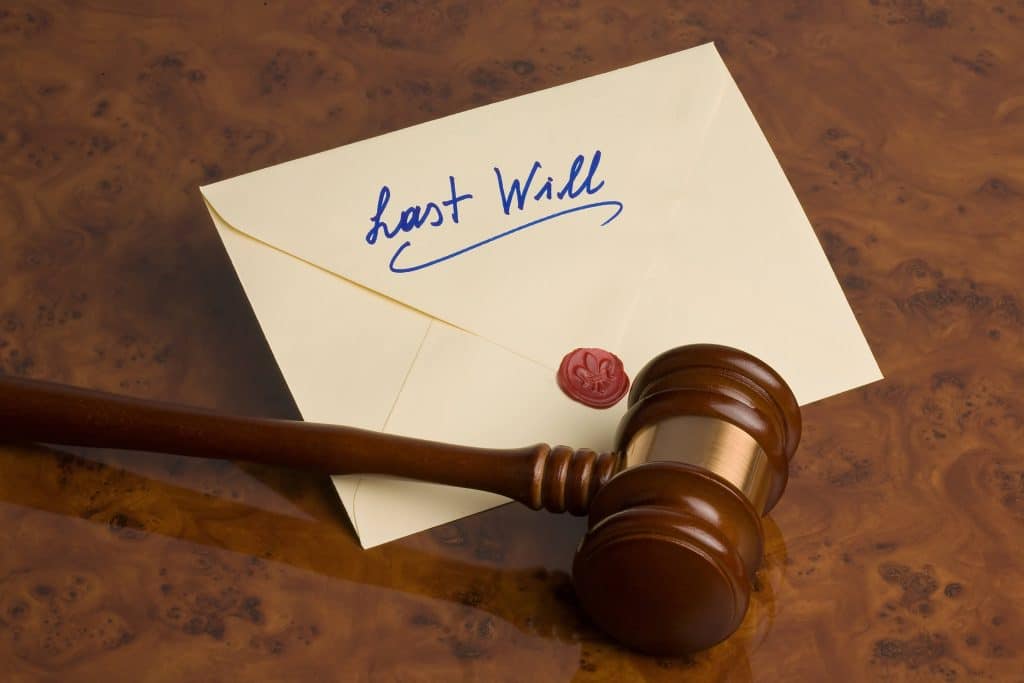
What Happens to an Invalid Will in Nevada
When a will is found to be invalid in Nevada probate, the estate is distributed as if no will existed. This means Nevada’s intestacy laws govern who receives what, in a fixed statutory order that may not reflect what the deceased person actually wanted.
Under NRS Chapter 134, intestate succession distributes the estate to the surviving spouse, then children, then more distant relatives in a defined sequence. A person who intended to leave everything to a long-term partner, a friend, a charity, or a specific family member to the exclusion of others, receives nothing if the will that expressed that intent is invalid and there is no valid alternative.
The gap between what someone intended and what intestacy produces is often significant. It is also entirely preventable.
Electronic Wills in Nevada
Nevada was among the first states to authorize electronic wills under NRS 133.085. An electronic will must meet specific requirements, including a qualified custodian, an electronic signature, and attestation by two witnesses through a specific remote process. Electronic wills that do not meet all of these requirements are not valid, and the requirements are more technical than those for a traditional attested will. Anyone considering an electronic will should work with an attorney familiar with Nevada’s specific electronic will statute.
The Common Thread in Will Validity Problems
Most will validity problems share a common thread: the issue was not visible at the time of signing. A witness who was technically interested, a signature that may have been added later, a testator who was competent most days but questionable on the day of signing, an ambiguous handwritten provision that seemed clear enough at the time: none of these problems announced themselves. They emerged later, in probate court, when resolving them became expensive, and the person who could have clarified their intent was no longer available.
The protection against these problems is not complicated: a will drafted and executed with the guidance of a qualified Nevada estate planning attorney, executed under conditions that are documented and defensible, and reviewed periodically to ensure it still reflects current intent and remains valid under current law.
At The Giuliani Law Firm, our Las Vegas attorneys assist clients with will preparation, estate planning, and probate administration in Las Vegas and Clark County. If you have questions about whether an existing will is valid, or if you need to have a will drafted that will hold up when it matters, our Las Vegas estate planning attorneys are available to help. Call (702) 388-9800 to schedule a consultation.
This article is for general informational purposes only and does not constitute legal advice. Nevada estate planning law is fact-specific; consult a licensed Nevada attorney about your situation.
Frequently Asked Questions
Does a will in Nevada need to be notarized?
Notarization is not required for a will to be valid in Nevada. However, a notarized self-proving affidavit can simplify probate by allowing the will to be accepted without requiring the witnesses to testify about its execution.
Can I write my own will in Nevada without an attorney?
Yes. Nevada allows individuals to create their own attested or holographic wills if they meet the applicable legal requirements. However, unclear language, omitted provisions, or improper treatment of certain assets can create problems during probate.
What happens if witnesses cannot be found when the will is probated?
If a will is not self-proved and the witnesses cannot be located, the court may consider other evidence to establish that the will was properly executed. This can complicate probate, which is one reason a self-proving affidavit can help.
Does a Nevada will need to list all of my property?
No. A Nevada will does not have to list every individual asset. A residuary clause can direct how property not specifically mentioned in the will should be distributed. Some assets, such as those with beneficiary designations, may also pass outside the will.
Can a will be contested in Nevada and on what grounds?
Yes. A Nevada will may be contested on grounds such as lack of testamentary capacity, undue influence, fraud, duress, forgery, or failure to meet legal execution requirements. The applicable procedures and burden of proof depend on the challenge.


